Nous sommes à votre disposition pour répondre à vos questions et accompagner vos projets de construction.
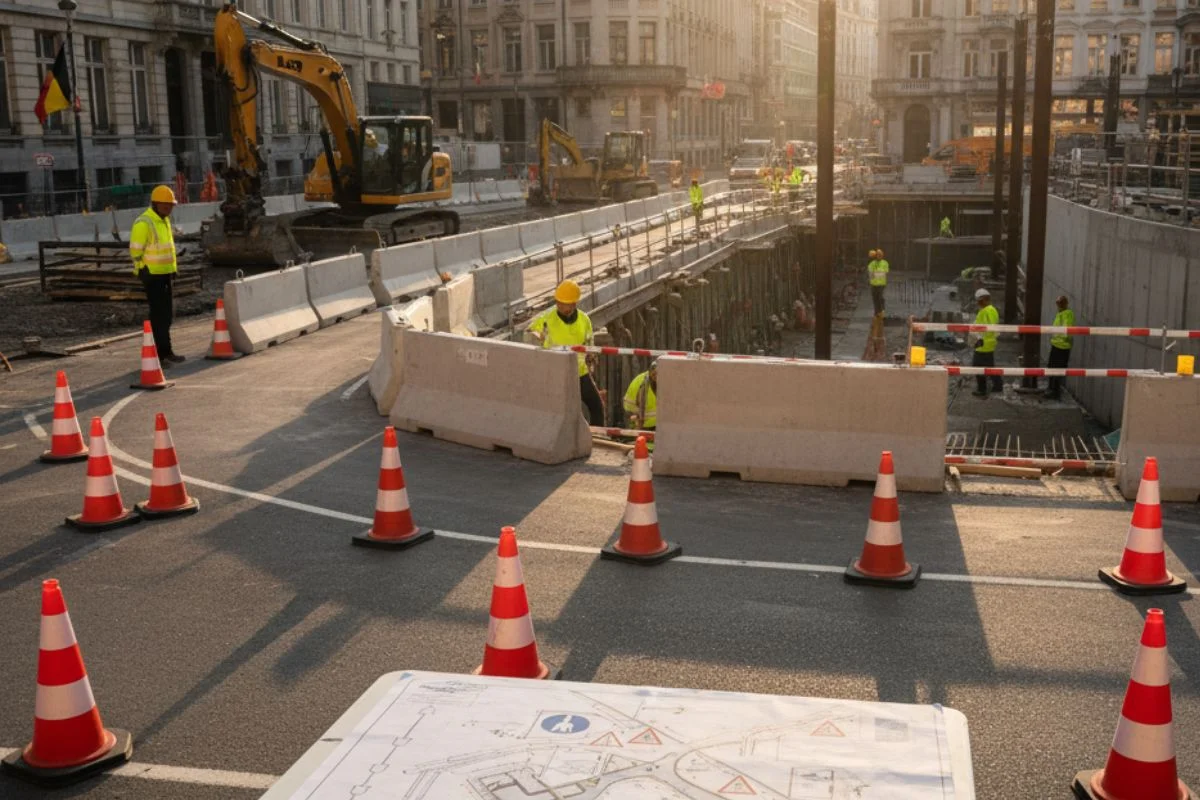
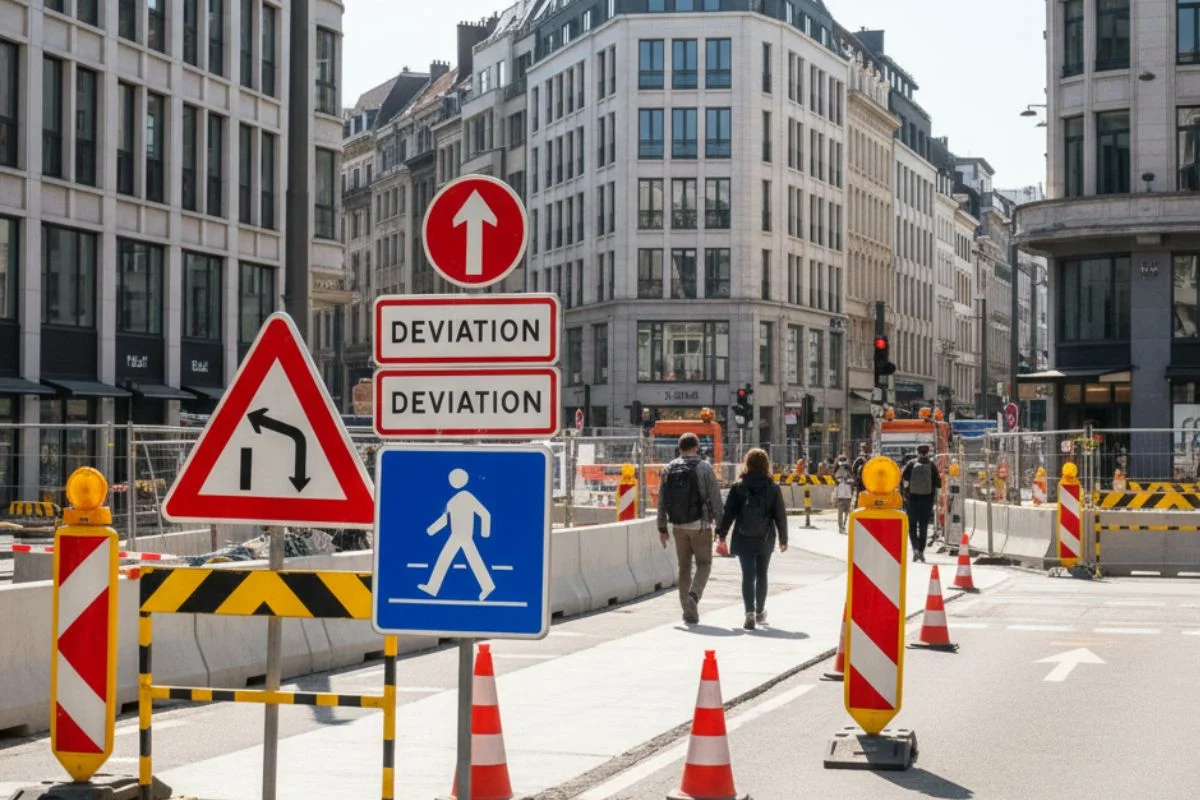

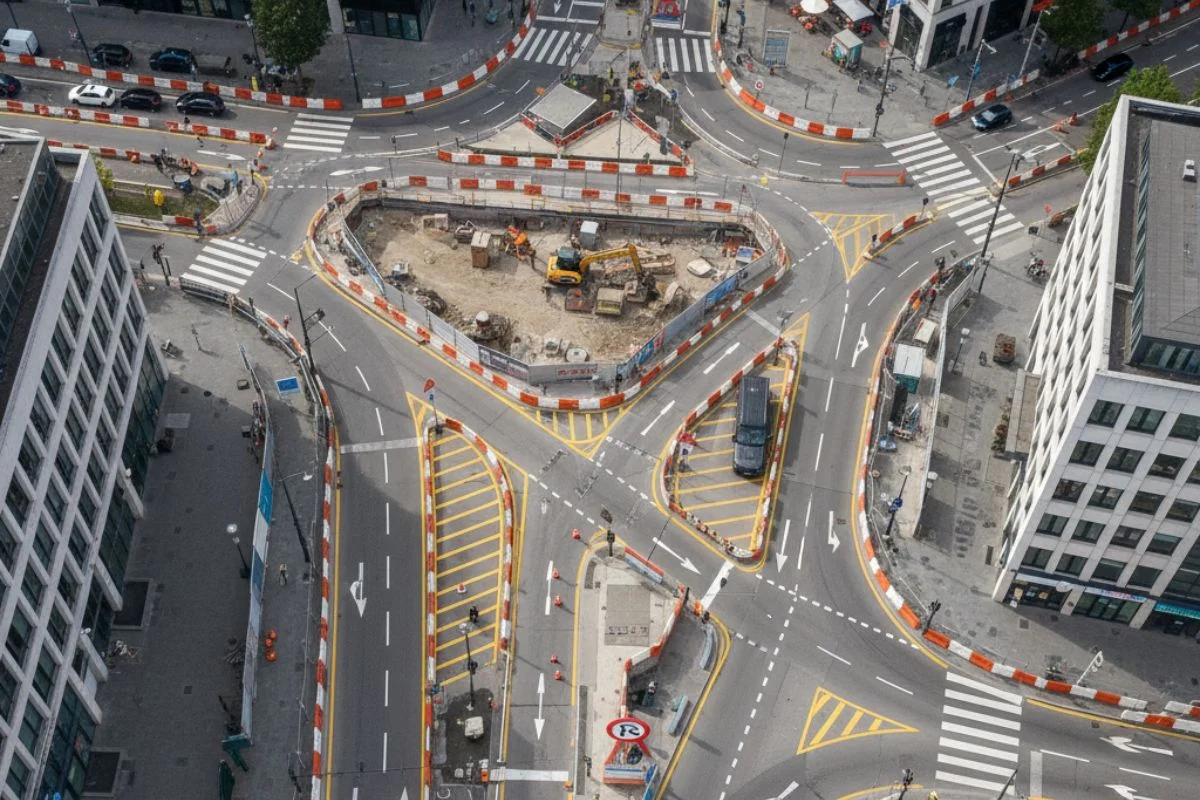
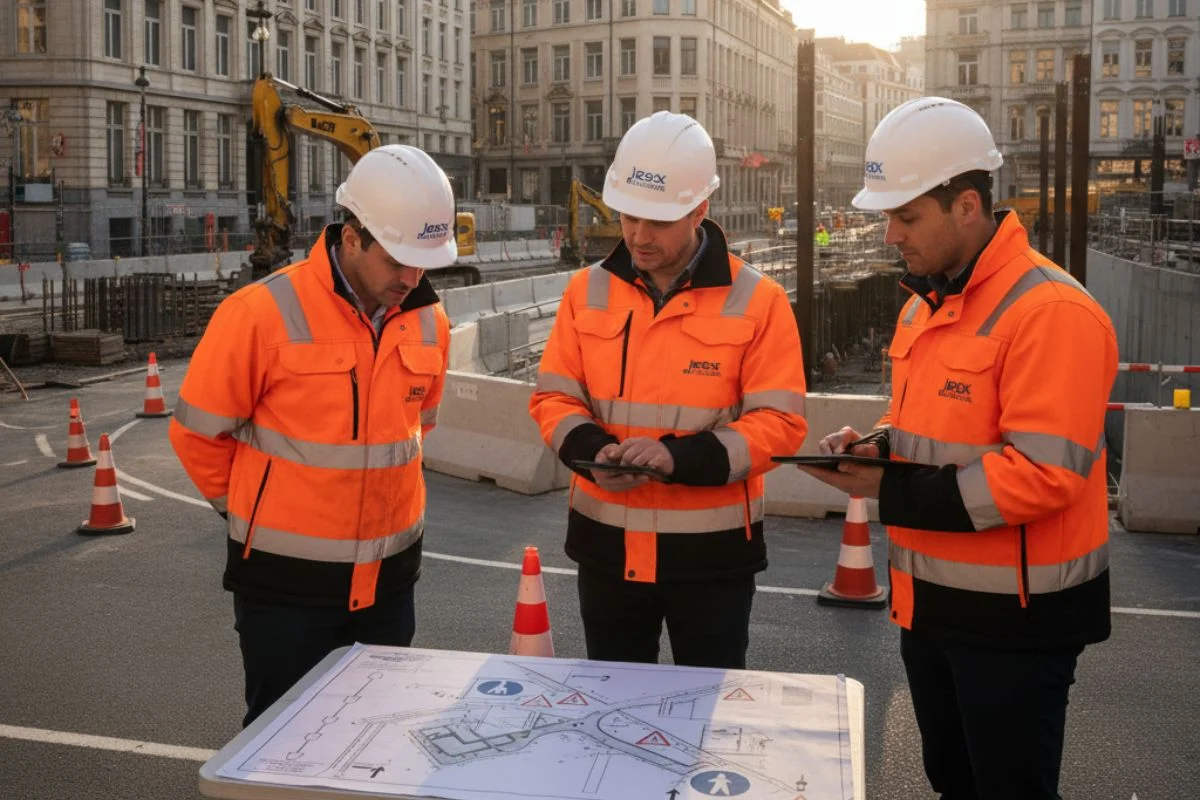
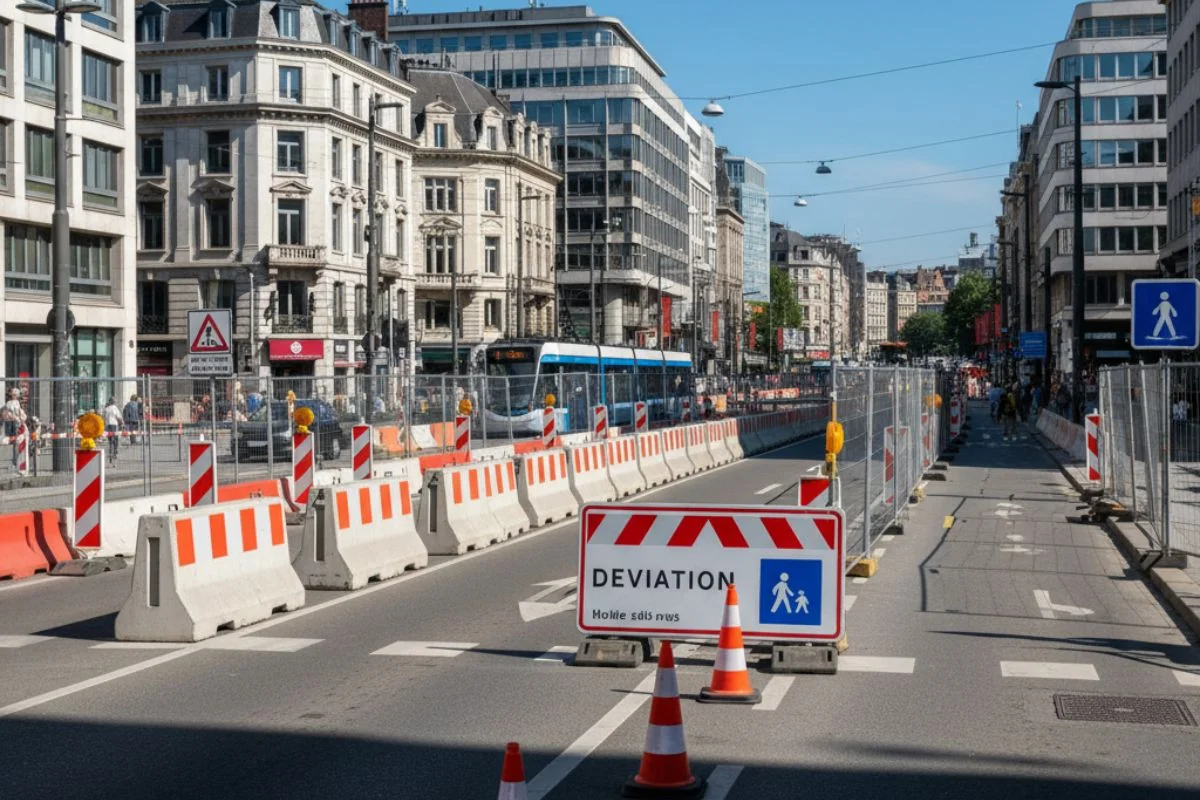
In Brussels, implementing signage plans is an essential requirement for any construction site impacting public roads or traffic flow. In such a dense urban region, where work zones are often located near schools, shops, or housing, clear and compliant signage plays a decisive role in ensuring the safety of workers, road users, and pedestrians.
Beyond a simple regulatory obligation, signage plans constitute a strategic tool for streamlining interventions, limiting accident risks, and ensuring harmonious cohabitation between the construction site and its environment.
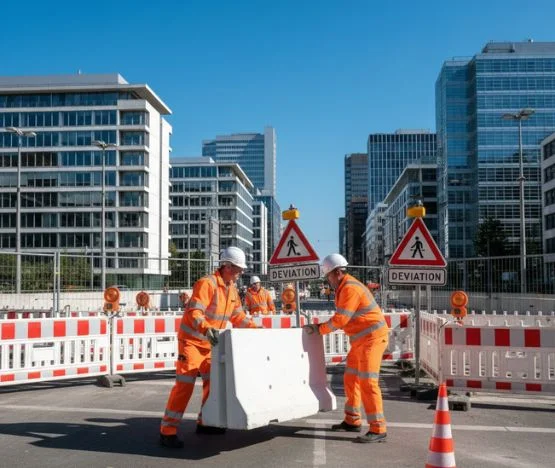

In a dense urban environment where heavy traffic, cycle paths, pedestrians, and public transport coexist, flow management is a permanent challenge.
Events, markets, or unforeseen diversions further complicate the situation. In this context, a well-designed signage plan is essential: it reduces the risk of accidents, organizes co-activity on the site, maintains traffic flow, and meets the requirements of competent authorities such as municipalities, Brussels Mobility, or the STIB.
Our experts are at your disposal to answer all your questions regarding your construction projects.
We monitor every stage to ensure compliance and minimize risks related to authorizations.
Our experience guarantees efficient and rapid management of authorizations, optimizing your time and resources.
Designing an effective signage plan requires following several key steps, from site analysis to validation by the competent authorities.
Survey of access points, local traffic, conflict points, street furniture, and user-related constraints.
Scaled graphic production, selection of standardized signs, and phasing if the site evolves over time.
Compliance check with municipal regulations, the CoBAT, and specific requirements for the type of roadway.
Sending the plan to the municipality or Brussels Mobility, accompanied by the application for road occupation authorization.
Installation in accordance with the validated plan, with on-site verification and any necessary adjustments.
An effective signage plan must be adapted to the site configuration and the type of roadway involved. It must notably include:

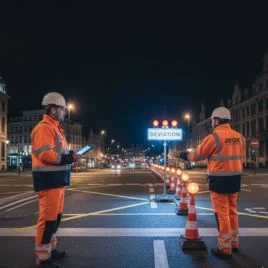
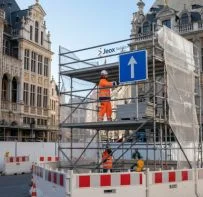
Signs, barriers, cones, light beacons, or ground markings
For vehicles, cyclists, and pedestrians
For bus stops or emergency services
Intervention times and the expected duration of disruptions
Active safety devices (temporary traffic lights, guiding personnel, etc.)
The entire package must be presented on a legible, scaled diagram, compliant with the requirements of the Regional Road Regulations and the recommendations of SPW Mobility and Infrastructure.
Inadequate, poorly positioned, or completely absent marking can lead to serious consequences. Firstly, it significantly increases the risk of personal injury involving workers as well as cyclists or other road users.
Beyond human danger, a lack of signage can incur civil or even criminal liability for the project owner. In some cases, authorities may order the immediate closure of the site. Finally, these failures damage the project’s image and can generate lasting tension with local residents.
+32 2 447 33 24

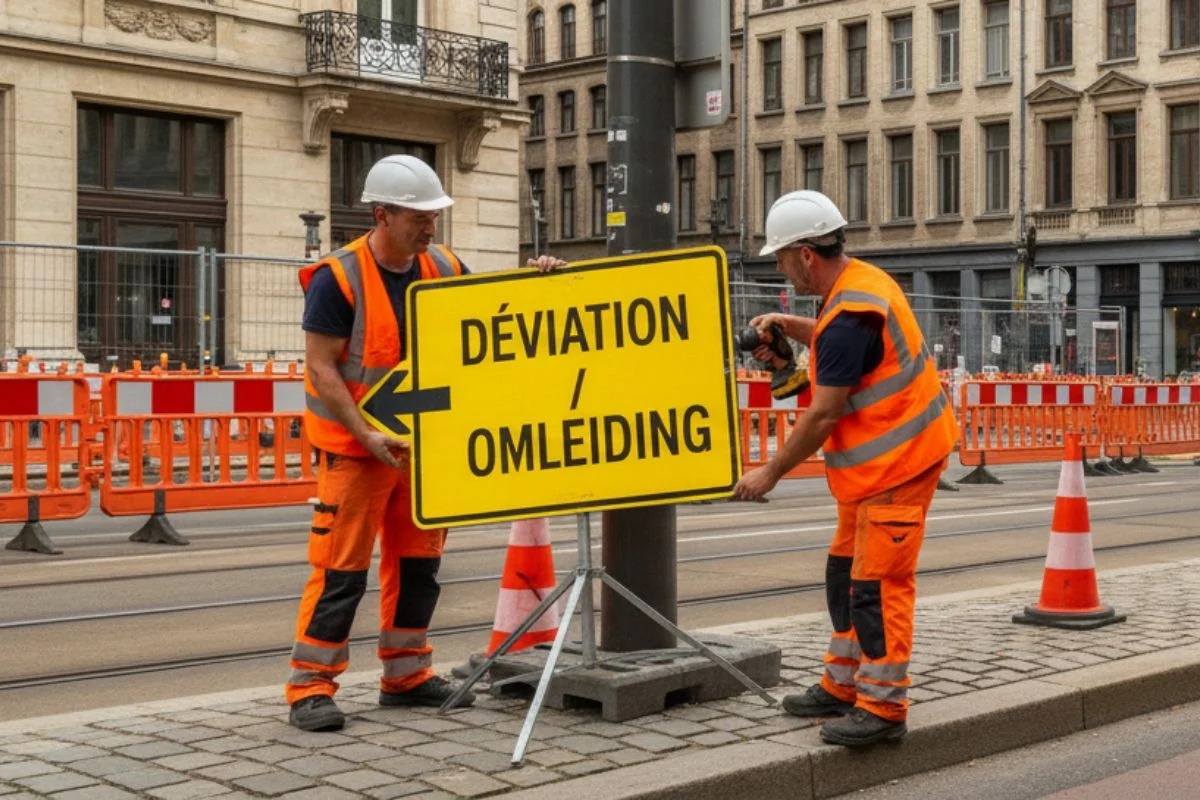
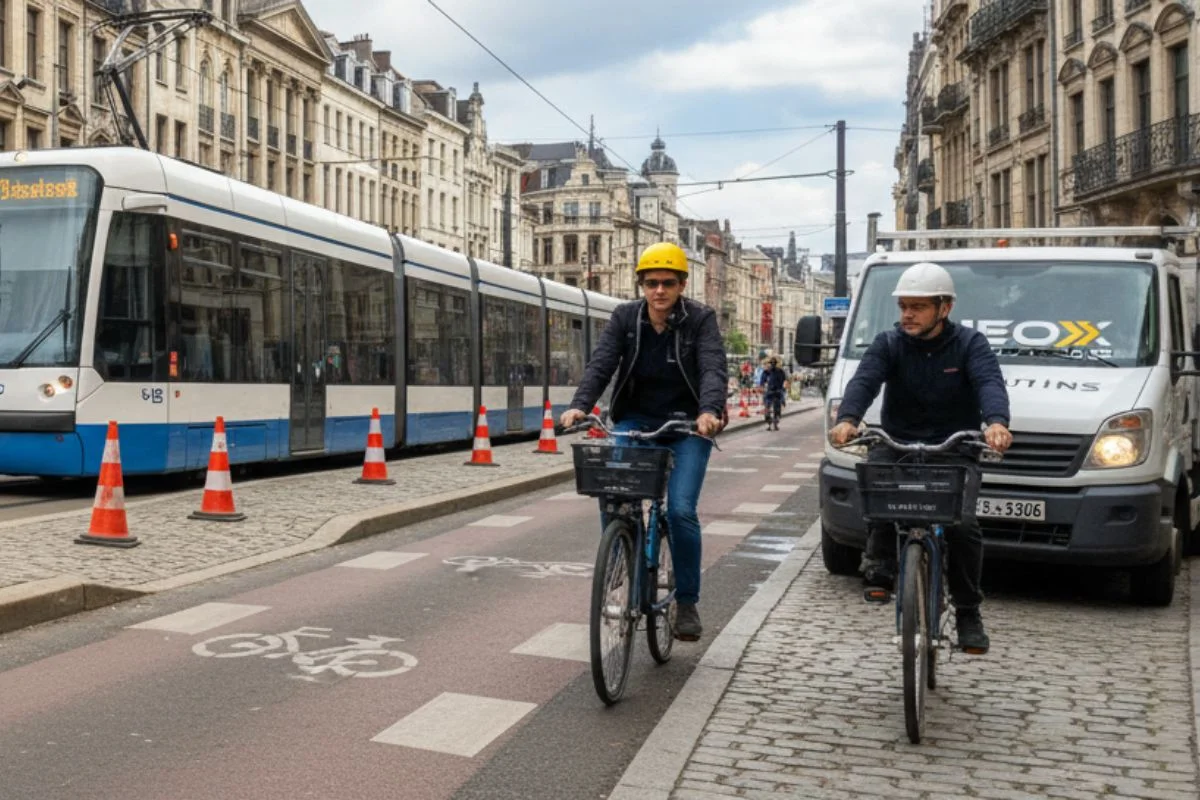
As of October 10, 2024, obligations regarding signage plans have been strengthened in the Brussels Region. Any construction site impacting public space, even briefly, must be subject to an authorization request from the relevant municipality or Brussels Mobility.


Since May 2024, municipalities also require schedules to integrate impacts on soft mobility and limited access zones (ZAL/ZAR).
For efficient and rapid construction site authorizations, trust the expertise of Jeox Solutions. Contact us today.


Votre point de contact unique entre les gestionnaires de voiries, les gestionnaires de réseaux et les entrepreneurs.